Image Creation (extra credit post)

I think many of the ethical considerations surrounding AI-generated images and videos are closely tied to the discussion of creativity we had in class. Reflecting on the reading about ChatGPT generating images in the style of Studio Ghibli, it raises concerns about copyright and the importance of giving credit to original creators. As someone who experimented with generating images in the Studio Ghibli style, I found it fun and understood why it has become so popular. However, from a creator’s perspective, it would feel unfair to see AI replicate your artistic style and produce numerous images for free and potentially without acknowledging the original source. It’s important to recognize that these works of art require significant time, effort, and creativity to produce, and they should not be so easily used by AI and distributed to others without proper consideration.

Source: The artifact isn’t the art: Rethinking creativity in the age of AI

Integrating AI into my life

I plan to use AI both personally and professionally going forward. At this point, not using it is not an option for me. After having taken this class and learning about its downsides such as the environmental costs, limited policy guidance, and potential impacts on skills like critical thinking and summarizing, I will be more careful about how, when, and for what I use it. This is all because I want to stay mindful of environmental responsibility, continue thinking independently, and remain aware of risks like data misuse. As I learn more about how AI systems work and their broader effects on society and on me, I’m beginning to clarify my own stance and set boundaries for responsible use. Ultimately, AI is a powerful and convenient tool that isn’t going away and I think learning to use it thoughtfully is an important skill to have going forward.

Creative AI

I think creativity can be defined as something that is novel, useful, interesting, and meaningful. I generally agree with Bhatia’s definition (from the Ghibli article), which describes creativity as novel and useful, but I would expand it to include interest and meaning. I include “interesting” because when people describe something as creative, they are usually also describing it as engaging or intriguing. I add “meaningful” because as the article emphasizes, there is an important shift from focusing on what is created to why it is created, especially in an era where AI can easily generate content. For something to be truly creative, it must matter both to the creator and to others. Ultimately, creativity is not just about producing something new or useful, but about the story, intention, and purpose behind it which are qualities that AI does not possess.

With this in mind, the LLM’s response to our prompt (to write a poem in the style of Shel Silverstein) was the following:

The 9-to-5-a-saurus has a tie around its neck,
It lives on bitter coffee and a monthly little check.
It doesn’t have a tail, but it has a rolling chair,
And a very frantic look beneath its thinning, grayish hair.

For me, it is difficult to find this poem interesting, although I recognize that my judgment may be biased because I know it was generated by AI. The poem does include rhyme and a funny concept (“9-to-5-a-saurus”), but these elements are derived from patterns found in existing poems. As we learned in class, LLMs generate text by predicting likely word sequences rather than creating from lived experience. It is also not genuinely novel since it is built from existing material, and it is not meaningful in the human sense. AI lacks emotions, experiences, and personal perspectives that give creative work its depth and significance. As the Bhatia article highlights, creativity depends heavily on the “why” behind a work. In this case, there is no underlying intention or lived motivation, but only statistical pattern generation. Without emotions, experiences, etc. the output lacks true meaning.

This experiment made me reflect more deeply on what it means for something to be creative. While creativity remains somewhat subjective, the rapid development of AI has clarified its essential qualities. Creativity involves not only novelty and usefulness, but also meaning and genuine interest which are qualities that stem from human experience. While the invention of AI and LLMs themselves can be considered creative achievements, the outputs they generate do not embody creativity in the same way because they lack the human context that gives creative work its purpose and significance.

Source: The artifact isn’t the art: Rethinking creativity in the age of AI

Post 3

Up until now, I had mostly been using LLMs to revise my writings including grammar, structure, and clarity so the promptings I did in class were fun and interesting. I think one of the most helpful prompting strategies I learned was the importance of being specific and clear with my prompting (I used Google Gemini). For instance, when I asked it to tell me about WW1, it gave me a follow up question: “Are you interested in a specific part of the war, like the life of a soldier in the trenches or the political maneuvering behind the scenes?” Additionally, when I told it to act as a teacher teaching it to elementary school students, the words used in the output became easier and beginner friendly which made it simpler and more accessible. E.g., “One day, a leader from a country called Austria-Hungary was hurt while visiting another place. Because of those “club promises” (which adults call alliances), one country joined the fight, then another, and another, until almost the whole world was involved!” This experience connects to the reading on prompting from OpenAI Academy which emphasizes the importance of clearly stating what you want the model to do and how you want the response delivered: “Be clear about what you need ChatGPT to do. Tell ChatGPT how you’d like the response”. These strategies may be helpful when learning about unfamiliar topics as they make complex information more approachable.

Post 2 AI Ethics

We’ve all heard of ChatGPT but not Notebook LM… It honestly took a while for me to learn how NotebookLM works before I could experiment with it in today’s lab. But after playing around with it for a while, I could see its usefulness and how it can be implemented into my research procedures going forward.

My research topic was Racial Bias in Face Recognition Algorithms. I first went into ChatGPT and asked it to provide multiple sources discussing this topic. I clicked on the first three and they were all pretty good. I had free access to all of them, I could download them easily, and they were all relevant to the topic. Then, I asked both ChatGPT and NotebookLM “what issues do all three sources raise regarding this topic?” Both platforms provided 6-7 bullet points with most points overlapping. This was a surprise to me. I initially expected NotebookLM to do better on it as it allows users to specifically upload documents and discuss about it whilst ChatGPT allows you to do pretty much anything. However, I would still not trust ChatGPT to be 100% accurate since it may simply be stating whatever is most common out there. With this in mind, I would likely use ChatGPT to find sources given that I can click on their links and verify their accuracy and legitimacy myself. I would also use it for simple, quick searches that do not require analyzing sources or research papers and can instead be answered using general information available on the internet. However, if I am trying to dive deeper into each source or combine and compare multiple sources I have found, I would use NotebookLM. I think it is important to keep in mind the purpose or goal of what I am trying to achieve as well as to understand the strengths and weaknesses of each AI tools when deciding which one to use.

https://pubmed.ncbi.nlm.nih.gov/33585821/?utm_source=chatgpt.com

https://www.mdpi.com/2079-9292/13/12/2317?utm_source=chatgpt.com

https://link.springer.com/article/10.1007/s43681-021-00108-6?utm_source=chatgpt.com

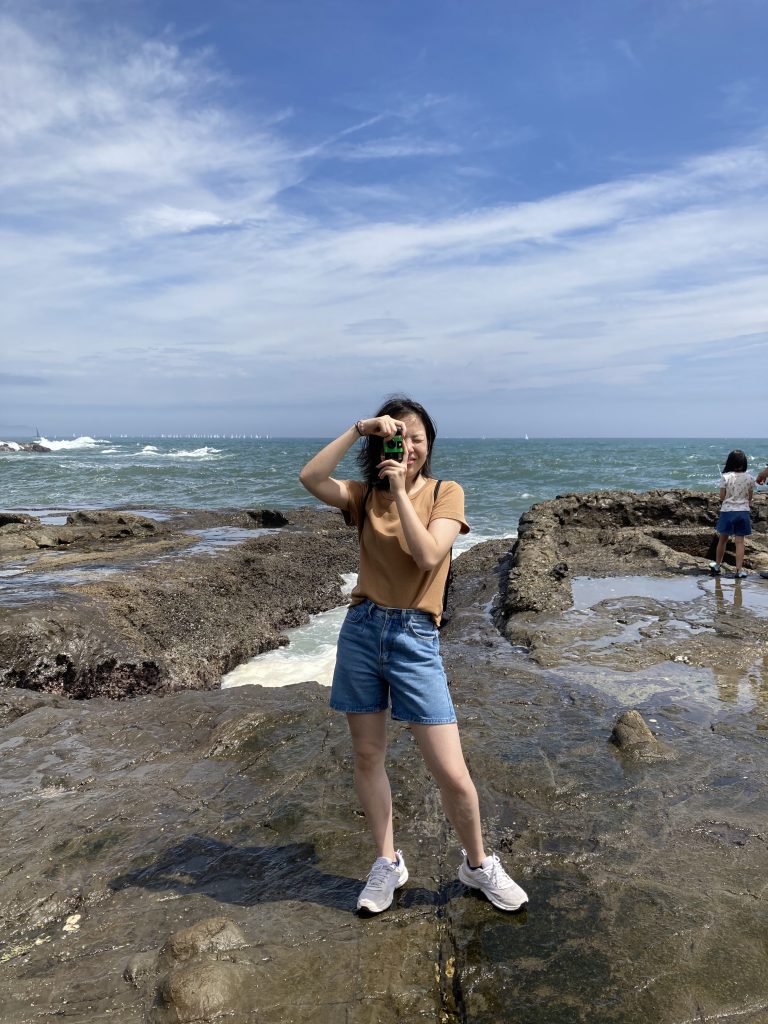
My name is Kyoka

I am a senior Psychology major from Tokyo, Japan. I love traveling, spending time with family, BTS, and getting boba with friends. I think AI is so deeply integrated into our daily lives now and can be found everywhere without us noticing it like phone facial recognition and Siri.