
Louis, Jordan, Dame
At the beginning, the starter prompt sort of seemed useful, but I knew that the response would be vague. I asked ChatGPT 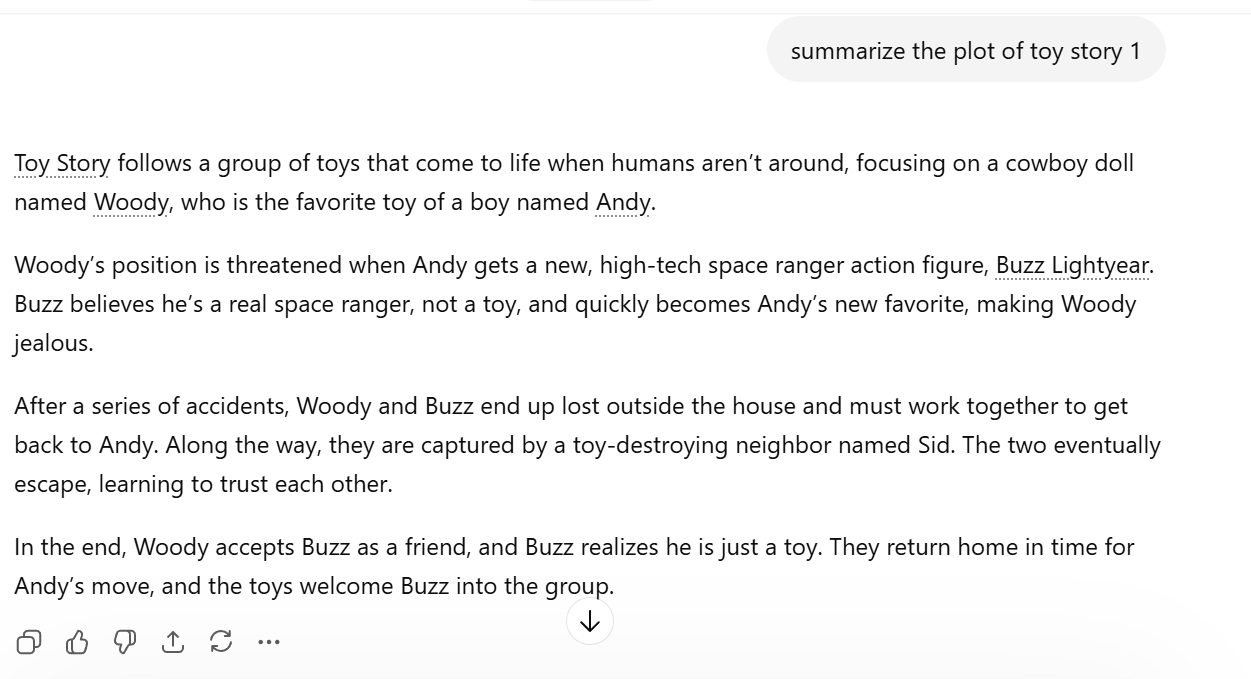 to summarize Toy Story and then I asked it to “summarize Shrek.” Both of these summaries were 8-10 sentences, not nearly enough to fully grab details from a film. The prompt pattern that made the biggest difference was giving it structure. I asked for it to give me a paragraph for each scene and it was much more detailed and searched the web before it did it, so it clearly found the things from the internet. After this, we asked it to help us all run faster in a month and it spit out a plan without knowing any details about us. I then used the reverse conversation method and asked it to ask us details about our height, weight, diets, sleep patterns and other details and once we answered those, it gave us a more detailed, precise plan that would last a month and it gave us an end goal. Overall, I learned that AI is good for outlines and specific plans, but only with specific details. In order to get good results, the user must be specific with their prompts and their results will continue to improve, especially when involving health desires. This draws back to the prompt literacy text that we went over for the week of March 31, where we discussed the benefits and issues behind AI.
That is a cool way to use AI. By summarizing movies or novels given a certain prompt it can fully help you understand what you are watching or reading.
Definitely a smart way to use AI! But… would Wikipedia be better for details? Maybe dropping a few resources for the movie into Notebook LLM might be able to help underline narrative choices and the like.